Cooling Systems
Imbat Positions Cooling in Data Centers as a “System”, Not Just a “Product”
Innovative HVAC brand Imbat is making a difference in the industry by offering scenario-based system solutions tailored to the diverse needs of data centers. Going beyond standalone equipment, the company develops integrated solutions where all components are designed under a single brand, factory-tested, and engineered to operate in full harmony in the field.
Data Center Cooling: Not Just Equipment, but a System Approach
Ensuring uninterrupted operation, achieving high energy efficiency, and maintaining redundancy in critical data centers can no longer be easily achieved through traditional fragmented solutions. To address these challenges, Imbat introduces ready-to-deploy solutions through its “scenario-based system approach.”
Scenario #1: The Need for Uninterrupted Operation
For critical data centers, the highest priority is ensuring that systems never stop operating. High data traffic, 24/7 service expectations, and strict business continuity requirements make redundancy and stability essential in cooling systems. Single-circuit configurations often prove insufficient under such conditions and create operational risks.
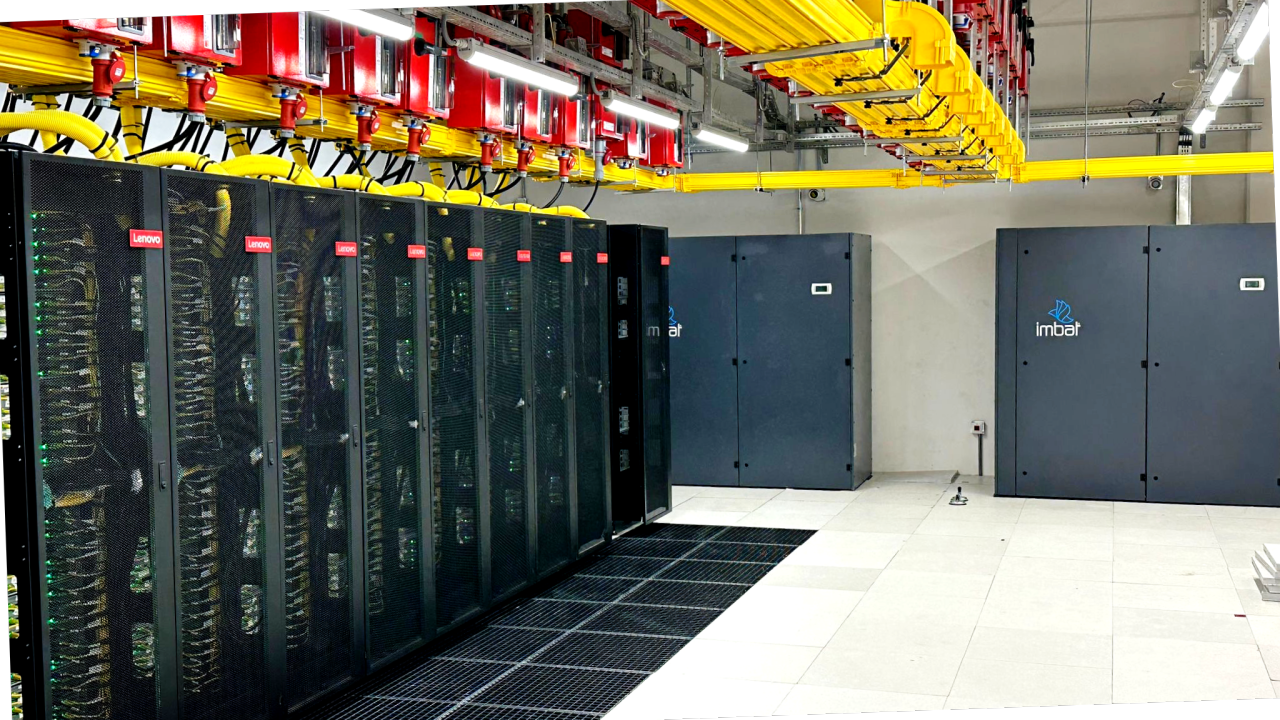
In this scenario, Imbat integrates a dual-fluid precision air conditioning unit with a chiller and dry cooler within the same system.
Dual-Fluid Precision Air Conditioner
Provides redundancy through two separate liquid circuits while maintaining precise environmental conditions with ±1°C temperature control and ±5% humidity control, ensuring reliable operation in sensitive environments.Chiller
Maintains system stability with consistent cooling capacity.Dry Cooler
Utilizes outdoor air conditions to reduce the load on the chiller and lower energy consumption.
This configuration enhances operational security in projects requiring N+1 or 2N redundancy, while also controlling operating costs through improved energy efficiency.
Scenario #2: The Need for Energy Efficiency
Cooling represents a significant portion of total energy consumption in data centers. Due to cost pressures and sustainability targets, operators are increasingly seeking solutions that improve energy efficiency. In facilities with relatively stable heat loads, free cooling technology provides a direct and effective answer to this challenge.
In Imbat’s second scenario, a water-cooled precision air conditioning unit works together with a free cooling chiller to address this need.
Water-Cooled Precision Air Conditioner
Delivers precise temperature control with its compact design.Free Cooling Chiller
Reduces energy consumption by switching off mechanical cooling when outdoor conditions are suitable.
This configuration improves PUE values in data centers with constant heat loads, lowers energy costs, and extends equipment lifespan.
One Brand, One Solution
The scenarios developed by Imbat provide not only equipment compatibility but also a strategic advantage in project management. Since the entire system is supplied by a single manufacturer, the risk of incompatibility in the field is eliminated, commissioning time is reduced, and the entire process can be managed through a single service point.
The Imbat Precision Air Conditioning series offers capacities ranging from 6 kW to 150 kW. Operating with R410A or R454B refrigerants, the units deliver high performance with EC fans, electronic expansion valves, and a fully automatic control system.
With integrated cooling, heating, humidification, and dehumidification functions, the system ensures reliable climate control in critical environments. Its high sensible heat ratio (0.83–1) supports energy efficiency and reduces operational costs.
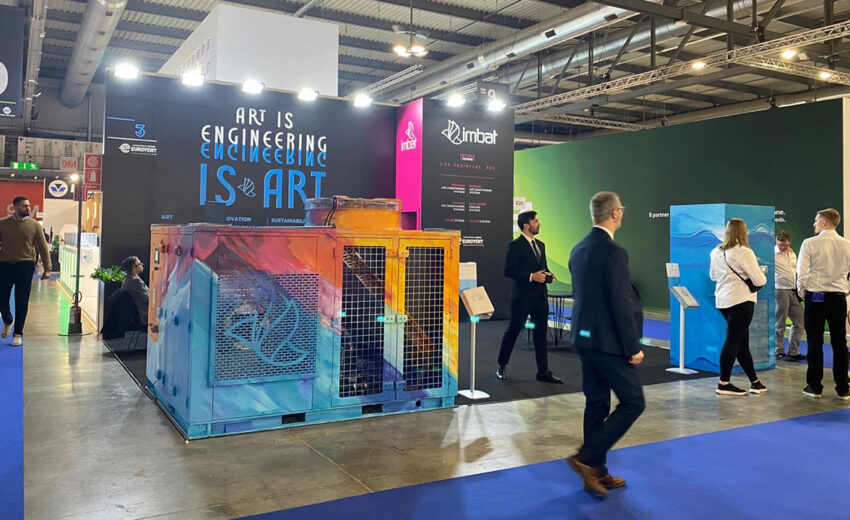
Imbat will showcase its scenario-based system solutions and Precision Air Conditioning Units live at the Sodex Istanbul Exhibition, October 22–25.
AHU + Chiller / VRF Configurations Create Efficiency Debates
Traditional Air Handling Unit (AHU) + Chiller or AHU + VRF combinations often lead to installation complexity on site due to the large number of separately operating components. These configurations typically result in high initial investment costs and challenging commissioning processes.
Each component requires its own infrastructure, automation, and energy management system, creating a significant burden in terms of both time and resources.
Rooftop systems present an integrated alternative to this conventional setup. By consolidating all air-conditioning functions into a single unit, they reduce the number of components, simplify installation, and streamline system management. With fewer elements on site, they achieve higher efficiency while enabling a more streamlined design and faster commissioning. Their centralized control structure also optimizes maintenance processes and reduces operational costs.
In this respect, rooftop systems represent not only a product choice but also a strategic simplification in project management.
At this point, it becomes crucial to see how these structural advantages translate into a real engineering solution in the field. The Perseus Rooftop series, developed by Imbat, stands out as a solution that technically integrates this approach while delivering tangible benefits in terms of energy efficiency and ease of application.
Perseus Rooftop Aligns with the Needs of Next-Generation Projects
Perseus Rooftop not only simplifies the integrated HVAC concept but also sets a new benchmark in long-term performance and sustainability.
The unit stands out with efficiency levels exceeding the latest EcoDesign+ criteria. Its double-skin casing features 50 mm thick A1-class stone wool panels and 70 kg/m³ density rock wool insulation, reducing heat losses, enhancing fire safety, and improving acoustic performance.
In addition to the traditional R410A refrigerant, Perseus Rooftop can also operate with R454B, which has 78% lower environmental impact, significantly reducing the carbon footprint while delivering high efficiency and environmentally responsible performance.
With an airflow capacity ranging from 3,850 to 55,200 m³/h and cooling capacity between 60 and 360 kW, Perseus Rooftop adapts to a wide range of project scales.
Replacing multiple pieces of rooftop equipment typically used in conventional systems, this compact structure shortens installation time, centralizes control systems, and eliminates on-site complexity. Optional features such as a HEPA filter module for improved indoor air quality and a thermodynamic heat recovery system capable of delivering up to 30% energy savings further enhance user comfort while reducing energy consumption.
With the Perseus Rooftop, Imbat is not only introducing a new product but also reshaping the way the industry thinks. By replacing fragmented, high-cost traditional system designs with simplified, integrated, and sustainable solutions, Imbat is leading this transformation in the HVAC sector.
The Perseus Rooftop series will be showcased to visitors at the Sodex Istanbul Exhibition, October 21–25 (Hall 4, Stand A02).