
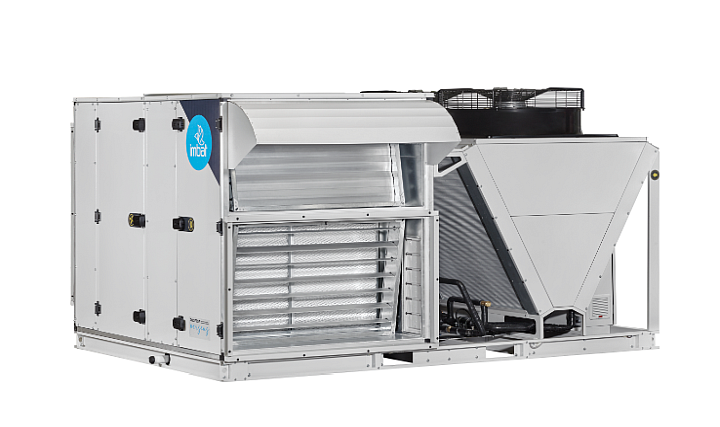
Trusted Performance
Imbat Perseus Rooftop Adds Confidence to Projects with High and Verified Efficiency
With its newly developed rooftop series, Perseus, Imbat brings high efficiency and technical reliability to the HVAC industry. Alongside its modern and compact design, the Perseus series stands out with outstanding energy performance, drawing significant attention across the sector.
News Link 1
News Link2
The Key to Real Performance: SEER and SCOP
Today, the energy efficiency of HVAC systems is no longer evaluated solely through laboratory data, but through seasonal performance criteria that consider changing outdoor conditions throughout the year.
At this point, SEER (Seasonal Energy Efficiency Ratio) indicates how efficiently a unit operates in cooling mode, while SCOP (Seasonal Coefficient of Performance) measures efficiency in heating mode. These two values clearly demonstrate how efficiently a system operates under real-life conditions while consuming minimal energy.
SEER and SCOP values are calculated according to the EN 14825 standard within the framework of European Ecodesign Regulations (ErP), enabling technically accurate comparisons between different systems. This allows users to select energy-efficient solutions with lower energy consumption.
Energy efficiency benefits not only project owners and engineers but also end users directly. Systems that consume less energy reduce operational costs and provide significant long-term savings. At the same time, more stable indoor conditions and a lower carbon footprint enhance living comfort while supporting environmental responsibility.
This sustainable approach delivers both economic and intangible value to all stakeholders — from investors and architects to contractors and end users. The documented high performance of Perseus fully supports this holistic benefit.
Imbat Perseus Rooftop: Real Efficiency, Real Confidence
Models within the Perseus series are independently tested and certified under the Eurovent Certification Program. As a result, performance data goes beyond manufacturer claims and becomes officially verified information approved by internationally recognized, impartial organizations.
Published within the Eurovent database, these verified results provide system designers and investors with a transparent, reliable, and comparable reference source.
The Perseus series is available with two refrigerant options: R410A and the lower environmental impact refrigerant R454B. Depending on configuration, models achieve SEER values ranging from 4.73 to 5.79 and SCOP values between 3.33 and 4.01. These performance ranges make the series a preferred solution, particularly for energy-efficiency-focused public and private sector projects.
Additionally, most models are classified within the A+ energy class, further validating their high efficiency. Perseus meets both efficiency and reliability expectations, creating measurable value in modern HVAC projects.
The Strategic Importance of Certified Data
Today, energy efficiency plays a decisive role in system selection and investment decisions. Therefore, independently verified performance data — going beyond manufacturer declarations — has become critically important for designers and decision-makers.
The Imbat Perseus Rooftop series fulfills this expectation by supporting technical reliability with documented certification.
Performance data for all Perseus models is verified under the Eurovent Certification Program, ensuring that information is not based solely on manufacturer statements but confirmed through officially certified and impartial sources.
This structure provides transparency during product selection and helps ensure that projected energy efficiency targets are achieved in real-world applications. It also offers investors confidence that systems will operate at defined performance levels from day one.
As a result, the Eurovent-certified Perseus series stands out not only as a technical solution but also as a reliable strategic choice for energy-efficiency-focused projects — delivering long-term economic and environmental benefits to all stakeholders, from end users to investors.